Understand the system
Start with the language, principles, tools, and components that make unfamiliar equipment easier to understand.
How you’ll learn
Technical work becomes clearer when theory and practice develop together. Northline's sample programs are organized around that idea: understand what a system does, examine how its parts work together, and practice a structured approach to real equipment.
Learning approach
Each pathway begins with fundamentals and gradually connects them to equipment, working processes, and technical problem-solving.
Start with the language, principles, tools, and components that make unfamiliar equipment easier to understand.
Use guided tasks to connect technical ideas with equipment, measurements, observations, and repeatable working processes.
Develop a structured way to observe a problem, gather useful information, and work through possible causes.
Move beyond individual components and begin seeing equipment as a complete system whose parts affect one another.
Inside the workshop
See principles applied to recognizable components and training equipment before working through a task.
Follow clear processes for inspection, measurement, observation, and documentation.
Understand how mechanical, electrical, airflow, and control elements can interact inside a larger system.
Learn to ask useful questions and move through technical problems methodically instead of guessing.
Choose a pathway
Explore the subject matter inside each sample program and see which technical direction interests you most.
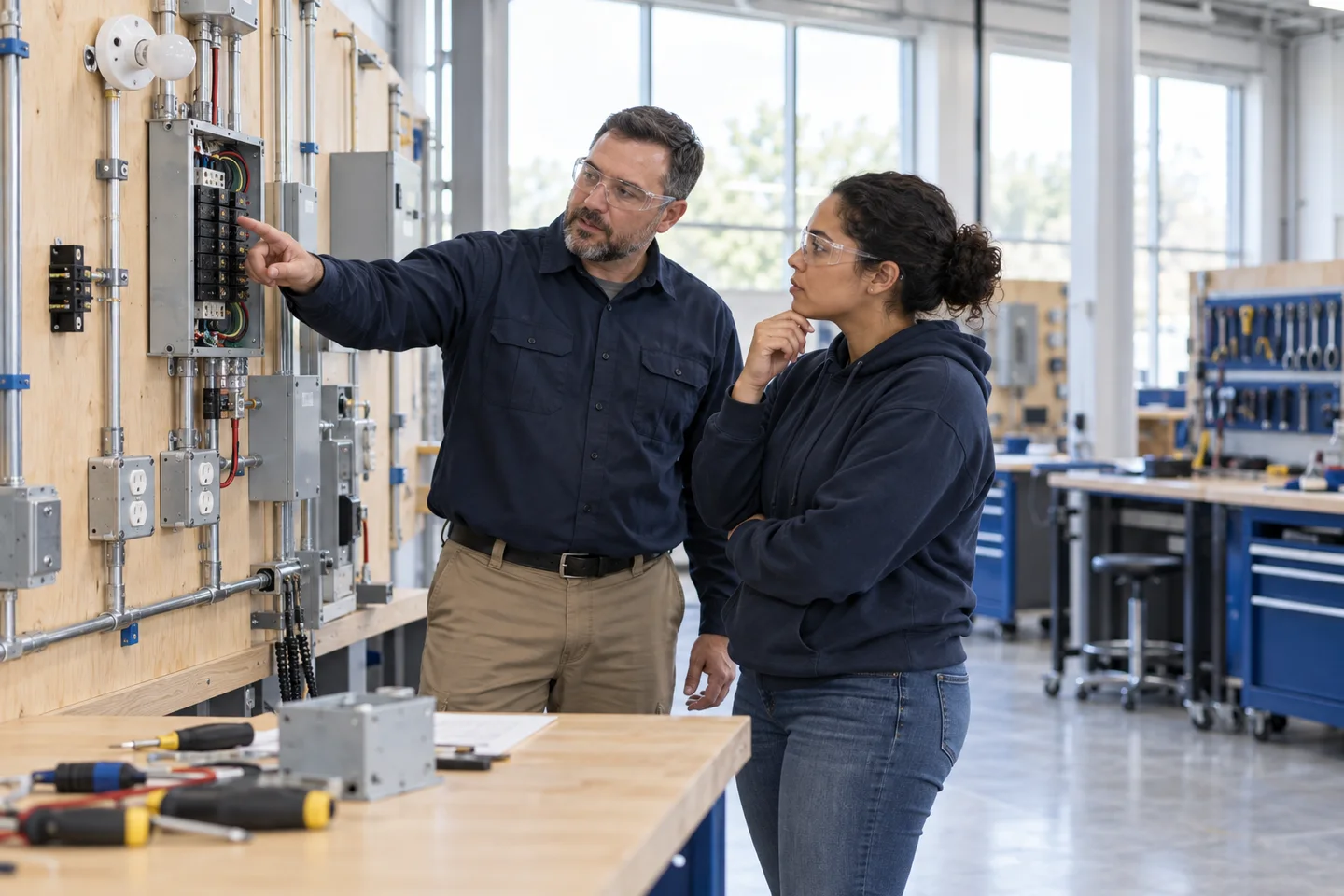
Build a foundation in circuits, tools, drawings, and safe working practices.
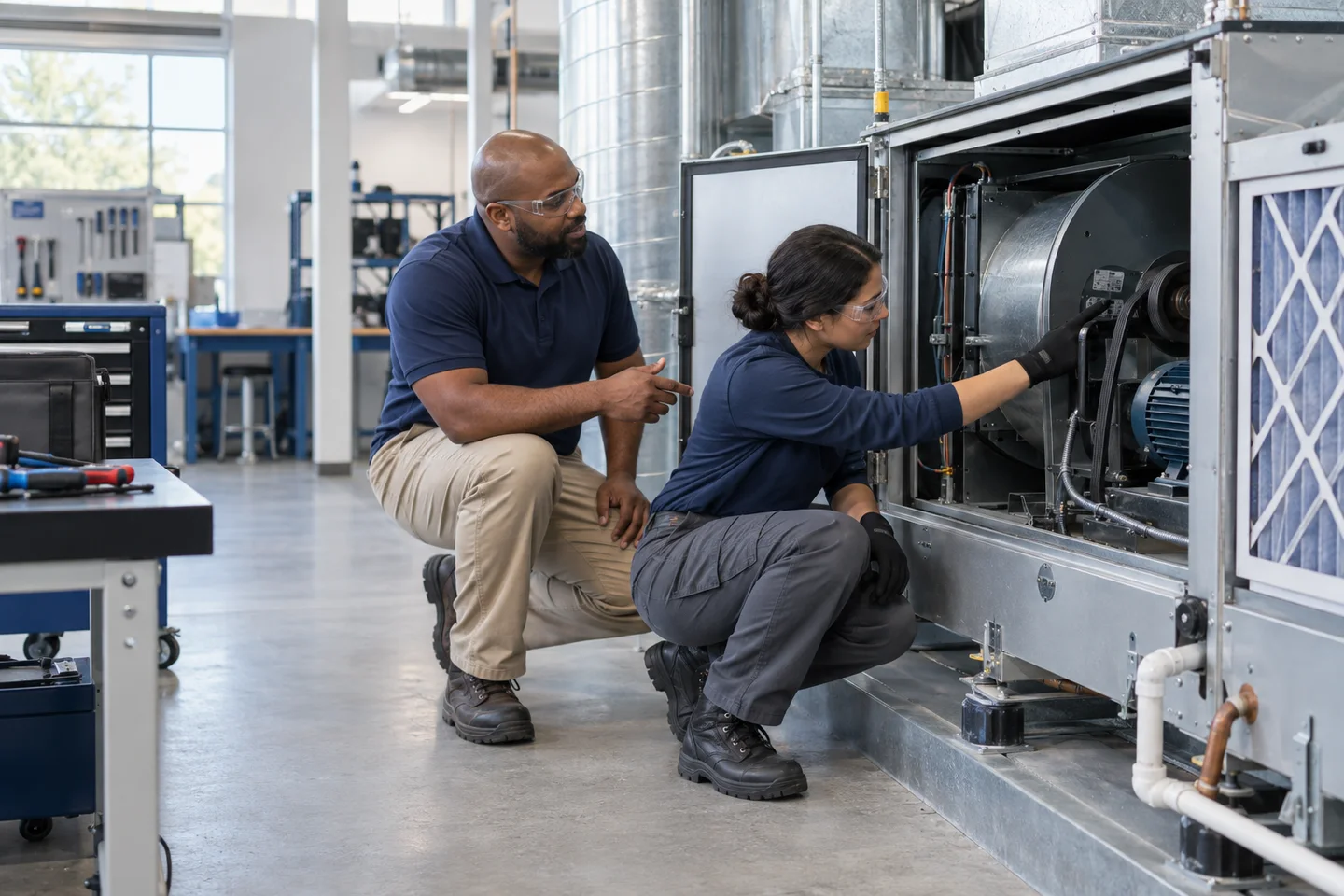
Explore heating, cooling, airflow, and a structured approach to troubleshooting.
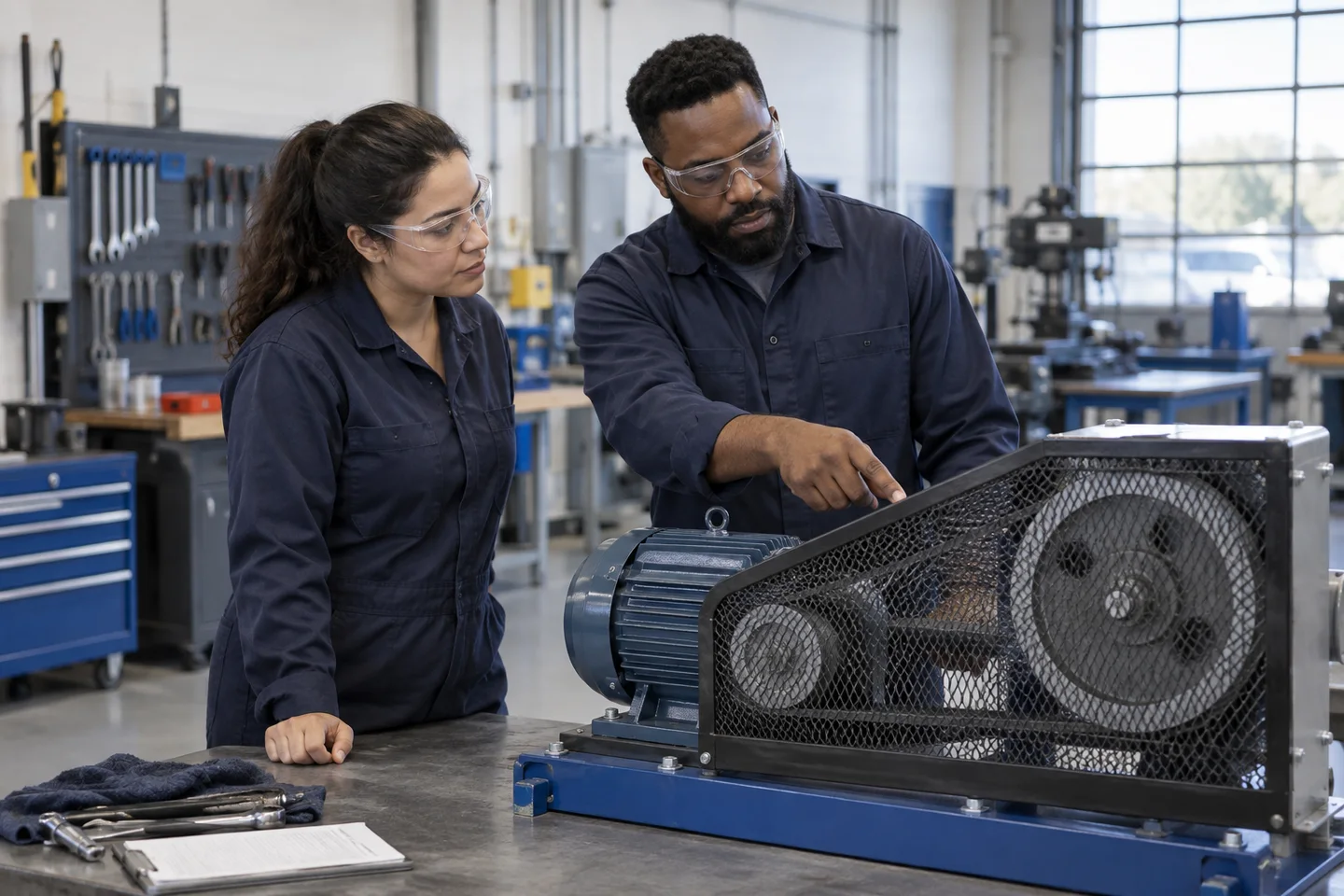
Learn how mechanical and electrical systems work together in equipment.
Plan the commitment
Compare the day and evening formats and the length of each pathway before choosing your next step.